
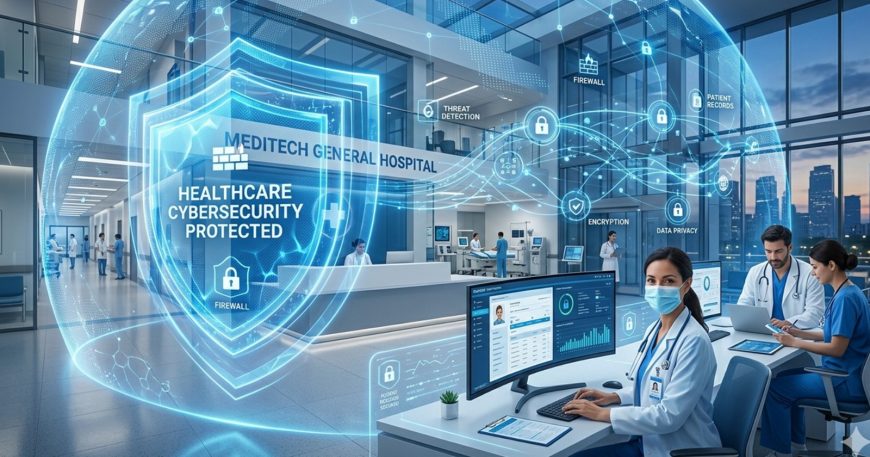
Healthcare organizations are the #1 target for cybercriminals. In 2024 alone, healthcare data breaches exposed over 168 million patient records the highest number ever recorded. And the average cost of a single healthcare data breach? $10.9 million.
The bad news: attackers are getting more sophisticated every year. The good news: most breaches are preventable with the right IT infrastructure and cybersecurity protocols in place.
At ALIS Technology, we have spent 25 years protecting hospitals, surgery centers, medical practices, and specialty clinics from exactly these threats. In this guide, we break down the 7 most dangerous cybersecurity risks facing healthcare providers today and give you actionable steps to defend against each one.
What You Will Learn in This Article
- Ransomware attacks targeting hospital systems.
- Phishing emails designed to fool clinical staff.
- Unpatched software and outdated EHR systems.
- Insider threats and accidental data leaks.
- Unsecured medical devices (IoMT vulnerabilities).
- Third-party vendor and supply chain risks.
- Lack of HIPAA-compliant data backup and recovery.
1. Ransomware Attacks: The Fastest-Growing Threat to Hospitals
Ransomware is malicious software that locks your systems and encrypts your data, then demands payment to restore access. In healthcare, this is catastrophic it can shut down EHR systems, delay surgeries, and put patients at direct risk.
In 2024, over 67% of healthcare organizations reported being hit by ransomware up from 34% in 2020. Hospitals have paid ransoms ranging from $50,000 to over $22 million.
How to protect your facility:
- Deploy endpoint detection and response (EDR) tools on all networked devices.
- Maintain offline, air-gapped backups that ransomware cannot reach.
- Segment your network so ransomware cannot spread across systems.
- Conduct regular ransomware simulation drills with your IT team.
- Partner with a managed IT provider who monitors your network 24/7.
2. Phishing Emails: The #1 Entry Point for Healthcare Breaches
Over 90% of all cyberattacks begin with a phishing email. Attackers send emails that appear to come from trusted sources insurance companies, EHR vendors, or even hospital leadership to trick staff into clicking malicious links or entering login credentials.
Healthcare workers are especially vulnerable because they handle high volumes of external communications and are often working under time pressure. A nurse who opens what appears to be a patient referral email can inadvertently give attackers full access to your systems.
How to protect your facility:
- Implement multi-factor authentication (MFA) on all email and EHR logins.
- Use advanced email filtering that flags suspicious senders and links.
- Run quarterly phishing simulation training for all clinical and admin staff.
- Establish a clear internal policy for reporting suspicious emails.
- Enable DMARC, DKIM, and SPF email authentication on your domain.
3. Unpatched Software and Outdated EHR Systems
Many healthcare facilities are running outdated operating systems, EHR platforms, or medical device firmware often because they cannot afford the downtime of an update, or because legacy systems are deeply embedded in clinical workflows.
Every unpatched system is an open door. Cybercriminals actively scan for known vulnerabilities in healthcare software vulnerabilities that manufacturers have already released patches for. Running unpatched systems is the equivalent of locking your front door but leaving the window open.
How to protect your facility:
- Create a complete inventory of every device and software version in your facility.
- Establish a monthly patch management schedule with minimal clinical disruption.
- Work with your EHR vendor to stay current on all security updates.
- Replace or isolate legacy systems that can no longer receive security patches.
- Have your managed IT provider handle automated patching across all endpoints.
4. Insider Threats and Accidental Data Leaks
Not all breaches come from outside attackers. A significant portion of healthcare data incidents are caused by insiders whether malicious employees stealing patient data, or well-meaning staff who accidentally send PHI to the wrong email address or save files to an unsecured personal device.
Under HIPAA, your organization is liable for both intentional and accidental disclosures of protected health information. A single misdirected fax or email containing patient records can trigger a HIPAA investigation.
How to protect your facility:
- Implement role-based access controls staff should only see data they need.
- Use data loss prevention (DLP) software to block unauthorized file transfers.
- Disable USB ports and personal cloud storage access on clinical workstations.
- Log and audit all access to electronic protected health information (ePHI).
- Conduct annual HIPAA privacy training for every staff member.
5. Unsecured Medical Devices (IoMT Vulnerabilities)
The Internet of Medical Things (IoMT) includes any networked medical device infusion pumps, patient monitors, imaging systems, smart beds, and more. The average hospital has 10 to 15 connected devices per patient bed. Most of these devices were never designed with cybersecurity in mind.
A compromised medical device can be used as an entry point to the broader hospital network, or in worst-case scenarios, can be manipulated to harm patients directly. The FDA has issued warnings about cybersecurity vulnerabilities in dozens of commonly used medical devices.
How to protect your facility:
- Place all medical devices on a separate, isolated network segment.
- Change default passwords on every device immediately upon installation.
- Work with biomedical engineering to track device firmware versions.
- Disable all device features and ports that are not clinically necessary.
- Require security assessments for all new medical device purchases.
6. Third-Party Vendor and Supply Chain Risks
Your cybersecurity is only as strong as your weakest vendor. Healthcare organizations work with dozens of third-party vendors billing companies, EHR providers, lab systems, telehealth platforms all of whom have some level of access to your systems or patient data.
The Change Healthcare breach of 2024 which disrupted claims processing for hospitals and pharmacies across the US was a stark reminder of how a single vendor breach can cripple an entire healthcare ecosystem.
How to protect your facility:
- Require a signed Business Associate Agreement (BAA) from every vendor.
- Assess the security posture of all third-party vendors annually.
- Limit vendor access to only the specific systems they need.
- Require vendors to notify you within 24 hours of any security incident.
- Have a contingency plan for every critical vendor in case of outage or breach
7. Lack of HIPAA-Compliant Backup and Disaster Recovery
HIPAA requires that all covered entities have a contingency plan including data backup, disaster recovery, and an emergency mode operations plan. Yet many smaller practices and surgery centers still rely on basic cloud sync tools or on-site drives that are neither encrypted nor regularly tested.
When a ransomware attack hits or a server fails, a proper backup is the difference between a 2-hour recovery and a 2-week shutdown. Without tested backups, many facilities find their recovery options are paying the ransom or starting from scratch.
How to protect your facility:
- Follow the 3-2-1 backup rule: 3 copies, 2 different media types, 1 offsite.
- Ensure all backups are encrypted and HIPAA-compliant.
- Test your backup restoration process quarterly not just annually.
- Document your disaster recovery plan and share it with department heads.
- Use a managed backup solution with automated monitoring and alerts.
Quick Reference: 7 Threats at a Glance
| Threat | Risk Level | Top Action |
| Ransomware | Critical | Offline backups + EDR |
| Phishing | Critical | Include upgrades in service agreements |
| Unpatched systems | High | Monthly patch schedule |
| Insider threats | High | Role-based access control |
| Unsecured devices | High | Network segmentation |
| Vendor risk | Medium | BAA + annual vendor audit |
| No DR plan | Critical | 3-2-1 backup + testing |
Is Your Healthcare Facility Protected?
ALIS Technology has been securing healthcare IT environments since 2001. We offer free cybersecurity assessments for hospitals, surgery centers, and medical practices across the US.
Visit alistechnology.com or call us: 773.245.1947 to schedule your free assessment today.
