
ASC IT SOLUTIONS • AMBULATORY SURGERY CENTERS

Ambulatory Surgery Center IT Services — Design, Implementation & Managed IT for ASCs

Complete IT services for ambulatory surgery centers (ASCs). ALIS Technology designs the IT footprint of new and renovated ASCs, deploys it under tight construction timelines, and operates it 24/7 after go-live — covering patient check-in, Wi-Fi 6E network, IP nurse call, secure paging, EMR integration, operating room (OR) integration platforms, audio video (AV) integration, VoIP telephony with E911 compliance, and HITRUST-aligned HIPAA compliance.

Wi-Fi 6E + Segmented VLANs IP Nurse Call (Rauland, Hill-Rom, Ascom) EMR Integration (Epic, Cerner, athena) OR AV (Stryker iSuite, KARL STORZ, Olympus) VoIP + E911 (Kari's Law, RAY BAUM'S Act) HITRUST + HIPAA 99.9% Uptime SLA
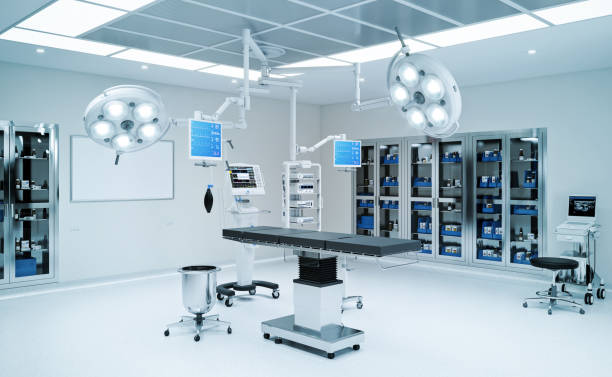
Modern ambulatory surgery center operating room with dual LED surgical lights, integrated AV monitor arms, surgical table, anesthesia equipment, and supply storage cabinets — designed and equipped by ALIS Technology

At a Glance — ASC IT Services from ALIS Technology

ALIS Technology provides end-to-end IT services for ambulatory surgery centers (ASCs) across three phases — Design, Construction & Implementation, and Ongoing Managed IT. Services include low-voltage cabling design and installation, Wi-Fi 6E network, IP-based nurse call (Rauland Responder, Hill-Rom Voalte, Ascom), secure clinical paging (Vocera, Spok, Ascom Myco), patient check-in kiosks, EMR integration (Epic, Cerner, athenahealth, eClinicalWorks, NextGen, Provation, HST Pathways, SIS), OR integration platforms (Stryker iSuite, Olympus EndoAlpha, KARL STORZ OR1, Getinge Tegris), audio video (AV) integration (conference rooms, digital signage, family waiting room displays, OR AV), VoIP telephony (cloud PBX, SIP trunking, UCaaS) with full E911 compliance (Kari's Law, RAY BAUM'S Act), HITRUST-aligned HIPAA compliance, and 24/7 managed operations with a 99.9% uptime SLA. Engagements sized for AAAHC, AAAASF, Joint Commission, and Medicare ASC certification.

WHY ASC IT MATTERS

The IT footprint of a modern ASC is non-negotiable for patient safety, throughput, and accreditation.

An ambulatory surgery center runs on technology from the moment a patient walks through the door to the moment they are discharged. EMR systems, surgical scheduling, anesthesia integration, nurse call, OR video routing, sterile processing tracking, and HIPAA-compliant data flows all depend on a network and security posture designed for clinical reliability. A 30-second EMR outage during a case is unacceptable. A nurse call system that goes silent during PACU recovery is a patient safety incident. A misconfigured VLAN can take down medical devices mid-procedure.

ALIS Technology designs ASC IT to meet the operational and regulatory bar of the most demanding accreditation surveys — AAAHC, AAAASF, The Joint Commission, and CMS Conditions for Coverage — while delivering measurable outcomes: shorter door-to-OR times, faster first-case-on-time starts, zero PHI breaches, and 99.9% uptime across surgical hours.

THREE-PHASE LIFECYCLE

From Architectural Design to 24/7 Managed Operations

ALIS Technology delivers ASC IT in three coordinated phases. Each phase has named deliverables, named stakeholders, and named timelines. Nothing is hand-waved.

ASC IT design phase — architectural blueprints, low-voltage cabling drawings, and Wi-Fi 6E heat-map plans for a new ambulatory surgery center
PHASE 01 • 8-16 WEEKS

Design — ASC IT Architecture Before Ground Breaks

Greenfield and renovation IT design. Deliverables include Cat 6A and OM4 fiber cabling drawings, Wi-Fi 6E heat-maps, IDF/MDF rack elevations, EMR integration plans, room-by-room device counts, and HIPAA Security Rule risk analysis.

ASC IT implementation phase — network and clinical IT engineer installing low-voltage cabling and clinical systems during ambulatory surgery center construction
PHASE 02 • 6-12 MONTHS

Construction & Implementation — On the Critical Path

Coordinated rough-in and trim with the general contractor, AV/IT trades, EMR vendor, and medical device manufacturers. Integration testing, HL7/FHIR validation, clinical staff training, and on-site go-live support.

ASC IT ongoing maintenance phase — 24/7 monitored data center and infrastructure powering managed IT services for ambulatory surgery centers
PHASE 03 • ONGOING

Managed IT — 24/7 Operations with 99.9% Uptime SLA

NOC monitoring, same-hour clinical helpdesk, patch and firmware management, encrypted backup and tested DR, quarterly HIPAA risk reviews, hardware lifecycle planning, and a single escalation path for every IT vendor.

PHASE 01 IN DETAIL

Design — Building the ASC IT Blueprint

What ALIS Technology designs in the pre-construction phase

Before the first wall goes up, every IT decision is captured in coordinated drawings and specifications. Designs are integrated with the architect's plans, the general contractor's schedule, the medical equipment planner's list, and the EMR vendor's go-live milestones.

  • Low-voltage cabling design — Cat 6A copper to every endpoint (clinical workstation, kiosk, IP phone, nurse call station, IP camera, access control reader, IP TV, AV display) and OM4 multimode fiber backbone between IDF closets and the MDF.
  • Wi-Fi 6E predictive heat-map — coverage modeling for OR, PACU, pre-op, recovery, waiting, staff lounge, and exterior parking with band-steering for clinical mobile devices.
  • Network architecture — segmented VLANs (clinical EMR, medical device, IoT, guest, management), redundant ISP uplinks with SD-WAN failover, UPS-backed core switching, and generator transfer planning.
  • Server and IDF/MDF rack elevations — full BOM (switches, firewalls, UPS, WAPs, controllers), HVAC and electrical load calculations coordinated with the MEP engineer.
  • EMR & medical device integration plan — Epic, Cerner, athenahealth, or specialty ASC EMR (Provation, HST Pathways, SurgicalNotes, SIS); HL7 v2.x interface specifications; FHIR R4 APIs; DICOM imaging connectivity.
  • OR technology design — boom locations (anesthesia, surgical, imaging), surgical lighting layout, integrated OR platform selection (Stryker iSuite, Olympus EndoAlpha, KARL STORZ OR1, Getinge Tegris), video routing and recording, PACS connectivity.
  • HIPAA Security Rule risk analysis — administrative, physical, and technical safeguards with documented controls, an audit-ready policies-and-procedures package, and AAAHC/AAAASF/Joint Commission IT readiness checklist.
  • Cost estimating and value engineering — line-item budgets with vendor alternates and a 10% contingency aligned with construction cost models.
PHASE 02 IN DETAIL

Construction & Implementation — IT on the Critical Path

How ALIS deploys ASC IT during construction

ASC IT is on the critical path of the project schedule. Cabling has to be in the walls before they close. Server rooms need power and cooling before equipment arrives. EMR builds, device interfaces, and clinical training have to be done before the first patient. ALIS Technology runs the IT track of the project the way the general contractor runs the building track.

  • Pre-construction coordination — IT pre-construction meetings with the architect, GC, MEP, medical equipment planner, EMR vendor, and biomedical engineering.
  • Phased rough-in — low-voltage cabling pulled and terminated during the rough-in phase; conduits, J-hooks, and pathways validated before drywall.
  • IDF / MDF buildout — server racks, UPS, switches, firewalls, wireless controllers, KVM, and structured cable management installed in coordination with electrical and HVAC trim.
  • Network and Wi-Fi commissioning — VLAN configuration, firewall policies, segmentation testing, Wi-Fi 6E site survey validation against predictive heat-map, and roaming verification.
  • Medical device and EMR integration — HL7 v2.x and FHIR R4 interface build, AIMS integration (Picis, Epic Anesthesia, Cerner SurgiNet), DICOM imaging routing, sterile processing connectivity.
  • OR integration build — boom commissioning, integrated OR platform configuration, video routing matrix, intra-op recording, EMR documentation flow.
  • Patient-facing technology — check-in kiosks, family waiting room displays, pre-registration SMS, secure tablet workflows, and accessibility testing.
  • Clinical staff training — role-based training for front office, pre-op, OR, anesthesia, PACU, sterile processing, and management with quick-reference cards and recorded sessions.
  • Go-live and 30-day stabilization — on-site engineers during first-case days, hourly check-ins with clinical leadership, and daily issue triage for 30 days post-go-live.
PHASE 03 IN DETAIL

Managed IT — 24/7 Operations Beyond Go-Live

How ALIS operates ASC IT after the doors open

A surgery center doesn't close at 5pm and reopen at 8am — first-case-on-time depends on overnight IT readiness. ALIS Technology operates the ASC IT environment 24/7 with a 99.9% uptime SLA, same-hour clinical helpdesk, and a single accountable escalation path for every IT vendor in the building.

  • 24/7 NOC monitoring — proactive monitoring of network, servers, Wi-Fi, EMR connectivity, security appliances, and medical device integrations with ASC-aware alerting (first-case time, surgical-hour priority).
  • Same-hour clinical helpdesk — US-based, on-call during all surgical hours, with dedicated phone lines for OR, pre-op, and front office.
  • Patch & firmware management — change-control-governed updates scheduled around the surgical calendar, with rollback playbooks.
  • Encrypted backup & tested disaster recovery — daily backups, immutable copies, quarterly DR runbook testing.
  • Quarterly HIPAA risk reviews — Security Rule risk analysis updates, OCR-audit-ready documentation, vendor BAA reviews.
  • Vendor coordination — single point of contact for EMR, medical device, AV, paging, nurse call, kiosk, copier, telecom, and ISP vendors.
  • Quarterly business reviews — uptime, ticket, security incident, compliance, and capacity metrics with action plans.
  • Hardware lifecycle & capital planning — refresh schedules aligned with depreciation and capital budgets.
CAPABILITY DEEP DIVES

Nine Integrated Capability Areas for a Modern ASC

Each capability is delivered as part of an integrated, accreditation-ready solution.

01 — Patient Check-In & Intake Technology

Privacy-first patient intake designed to shorten door-to-OR time while protecting PHI.

  • Self-service kiosks with privacy screens and de-identified queue numbers
  • Mobile pre-registration via secure HIPAA-aligned links sent 3-7 days pre-procedure
  • Tablet workflows for surgical consent, anesthesia history, electronic signatures
  • QR-code arrival check-in with contactless ID and insurance card capture
  • Waiting room status displays — de-identified, color-coded, ADA-compliant
  • Practice management integration for instant scheduling lookup

02 — Wi-Fi 6E & Network Infrastructure

Enterprise-grade clinical network engineered for medical device reliability and HIPAA segmentation.

  • Wi-Fi 6E coverage with seamless roaming across OR, PACU, pre-op, recovery
  • Segmented VLANs: clinical EMR, medical device, IoT, guest, management
  • Cat 6A copper to every endpoint; OM4 fiber backbone between IDFs and MDF
  • PoE+ for IP cameras, IP phones, kiosks, nurse call, access control
  • Redundant ISP uplinks with SD-WAN failover, UPS-backed core, generator transfer
  • High-density Wi-Fi for waiting areas; band-steering for clinical mobile devices

03 — Paging & Nurse Call Systems

IP-based nurse call and secure mobile clinical paging — wired during construction.

  • IP nurse call: Rauland Responder 5, Hill-Rom (Baxter) Voalte, Ascom Telligence
  • Secure mobile paging: Ascom Myco 3, Vocera Smartbadge, Spok Mobile
  • OR-to-PACU and pre-op-to-OR alerts with escalation rules and time-outs
  • Family text-message status updates with explicit patient opt-in
  • EMR bed-board integration, surgical schedule, case-status dashboards
  • Code-blue and code-stroke escalation with full audit logging for accreditation

04 — EMR & Clinical IT Integration

EMR integration and medical device connectivity across the perioperative workflow.

  • EMR / EHR: Epic, Cerner (Oracle Health), athenahealth, eClinicalWorks, NextGen
  • Specialty ASC EMR: Provation MD, HST Pathways, SurgicalNotes, SIS, Vision
  • AIMS integration: Picis, Epic Anesthesia, Cerner SurgiNet
  • HL7 v2.x, FHIR R4, DICOM for device connectivity and imaging
  • Sterile processing tracking with RFID and barcode scanning
  • Inventory and implant tracking with practice management integration

05 — Operating Room (OR) IT Design & Integration

Modern ORs require integrated AV, surgical lighting, anesthesia, imaging, and EMR — all coordinated.

  • Boom systems — anesthesia, surgical, imaging, and equipment booms from Stryker, Steris, Skytron, Trumpf
  • Surgical lighting — LED with integrated 4K cameras (Maquet PowerLED, Steris Harmony, Stryker)
  • Integrated OR platforms — Stryker iSuite, Olympus EndoAlpha, KARL STORZ OR1, Getinge Tegris
  • Video routing & recording — 4K matrix switching, intra-op recording, PACS connectivity
  • Anesthesia integration — AIMS workstations, gas monitoring, vital signs, MAC/general anesthesia
  • Imaging — C-arm, fluoroscopy, ultrasound, intraoperative CT; DICOM routing to PACS
  • Smoke evacuation, surgical helmets, robotic surgery readiness (da Vinci, Mako, Hugo, Versius)

06 — Security, Privacy & HIPAA Compliance

HITRUST-aligned controls, encryption everywhere, accreditation-ready documentation.

  • HITRUST-aligned controls; signed BAA with every engagement
  • Encryption: AES-256 at rest, TLS 1.3 in transit, S/MIME encrypted email for PHI
  • RBAC + MFA + SSO: Okta, Microsoft Entra ID, Google Workspace
  • 24/7 SIEM/SOAR with same-hour incident response and forensic readiness
  • Quarterly HIPAA risk assessments; OCR-audit-ready documentation
  • Accreditation readiness: AAAHC, AAAASF, Joint Commission, Medicare ASC

07 — Managed IT Services for ASCs

24/7 managed IT operations with same-hour clinical helpdesk and a single accountable vendor.

  • 24/7 monitoring with 99.9% uptime SLA and ASC-aware escalation
  • Same-hour helpdesk for clinicians during all surgical hours
  • Patch management, firmware updates, encrypted backup, tested DR
  • Vendor coordination: EMR, medical device, AV, paging, nurse call, kiosk, copier
  • Quarterly business reviews with uptime, ticket, security, compliance metrics
  • Hardware lifecycle & capital planning aligned with depreciation cycles

08 — Audio Video (AV) Integration for ASCs

Professional AV integration across conference rooms, family waiting areas, ORs, and training spaces.

  • OR AV integration: Stryker iSuite, Olympus EndoAlpha, KARL STORZ OR1, Getinge Tegris with 4K video routing and intra-op recording
  • Family waiting room displays: de-identified case status, wayfinding, donor recognition, broadcast IPTV
  • Conference and board room AV: Microsoft Teams Rooms, Zoom Rooms, Google Meet hardware for physician meetings and case reviews
  • Training and lecture rooms: lecture capture, audience response, large-format displays
  • Control systems: Crestron, AMX, Extron, Q-SYS for AV, lighting, and shades
  • Sound masking and paging: integrated with nurse call and code blue/stroke alerts

09 — VoIP Telephony & Unified Communications

Cloud-based VoIP telephony engineered for ASC clinical operations, E911-compliant from day one.

  • Cloud PBX: RingCentral, 8x8, Microsoft Teams Phone, Vonage, Zoom Phone, Cisco Webex Calling
  • SIP trunking with redundant carriers and automatic failover
  • VoIP handsets in OR, PACU, pre-op, nurse stations, front office (Cisco, Yealink, Poly, Mitel)
  • E911 compliance: Kari's Law direct 911 dialing and on-site notification; RAY BAUM'S Act dispatchable location with room-level granularity
  • Auto-attendants and IVR: surgical-hour routing, after-hours flow, on-call escalation, voicemail-to-email transcription
  • Integration with nurse call and paging for code blue, code stroke, and OR alerts
MULTI-SPECIALTY ASC SUPPORT

IT Designed for Every ASC Specialty

Multi-specialty ambulatory surgery centers run more cases per OR per day, with more specialty-specific equipment, EMR templates, and reporting requirements. ALIS Technology configures the IT stack for each specialty present in the center.

Gastroenterology (GI)

Endoscopy reporting (Provation, ProVation), scope tracking, image capture, sedation documentation.

Orthopedics

Implant tracking, navigation systems, robotic surgery (Mako, ROSA), C-arm imaging, PACS integration.

Ophthalmology

Optical biometry (IOLMaster), femtosecond lasers, surgical microscopy, EMR (NextGen, EyeMD, Modernizing Medicine).

ENT / Otolaryngology

Endoscopy towers, image-guided sinus surgery, balloon sinuplasty, audiology integration.

Pain Management

Fluoroscopy, ultrasound guidance, controlled-substance reporting, EMR integration.

Plastic Surgery

Image management for before/after, electronic consents, anesthesia integration.

Urology

Lithotripsy integration, cystoscopy, robotic urology (da Vinci), prostate imaging.

Cardiology

Cath lab integration, hemodynamic monitoring, structural heart, EP procedures.

Gynecology

Hysteroscopy, robotic gyn surgery, fertility integration, anesthesia management.

Podiatry

X-ray, foot/ankle imaging, anesthesia integration, EMR templates.

Spine

O-arm, navigation, neuromonitoring, image-guided surgery.

Dental / Oral Surgery

CBCT integration, sedation documentation, implant tracking.

MODERN ASC 2026

What a Modern Multi-Specialty ASC Needs in 2026

The bar for ASC technology has moved decisively upward. AI-enabled documentation, robotic-surgery readiness, RTLS, zero-trust security, and sustainability are no longer optional.

AI-Enabled Clinical Documentation

Ambient AI scribes for anesthesia, op notes, and discharge summaries; RAG-grounded clinical copilots; HIPAA-aware guardrails.

Robotic Surgery Readiness

Network, power, and integration for Intuitive da Vinci, Stryker Mako, Medtronic Hugo, CMR Versius, and Zimmer ROSA.

RTLS & Patient Tracking

Real-time location services for staff, patients, instruments, and high-value mobile equipment using BLE, UWB, or Wi-Fi.

Zero-Trust Cybersecurity

Identity-based access, micro-segmentation, continuous verification — meets HITRUST CSF and OCR audit expectations.

Sustainability & Energy Monitoring

LED lighting, smart HVAC, energy submetering, OR turnover efficiency analytics.

Patient Mobile Experience

Pre-registration, day-of mobile check-in, family status updates, post-op satisfaction surveys.

Hybrid OR Capability

Integrated imaging (C-arm, CT, MRI-compatible) for complex orthopedic, cardiovascular, and spine cases.

Telehealth & Pre/Post-Op Care

Pre-anesthesia screening, virtual consents, post-op video check-ins integrated with the EMR.

Data Analytics & Benchmarking

OR utilization, first-case-on-time, turnover, surgeon productivity, supply utilization dashboards.

CONSTRUCTION STAGES

From Drawings to Doors-Open — Visual Walkthrough

ASC IT runs in parallel with every construction stage. Here is how the project unfolds.

2026 Modern Multi-Specialty ASC — Lifecycle Infographic

An at-a-glance reference covering Design, Construction, IT Implementation, OR Design, and the technology stack a modern multi-specialty ambulatory surgery center needs in 2026. Print-ready, accreditation-aligned.

Open the Infographic
COMPLIANCE & ACCREDITATION

Built for Every Accreditation Survey

ALIS Technology delivers audit-ready documentation and IT controls for the major ambulatory surgery center accreditation and regulatory bodies. Every engagement includes a HIPAA Security Rule risk analysis, an evidence binder for IT controls, and a vendor BAA package.

AAAHC AAAASF The Joint Commission CMS / Medicare ASC HIPAA Privacy & Security HITRUST CSF State DOH OCR Audit Ready
CASE STUDY

Outpatient Surgery Center — Comprehensive IT Buildout

A Chicago-based outpatient surgery center engaged ALIS Technology to replace aging IT infrastructure that was slowing patient flow and exposing PHI to compliance risk. The engagement covered end-to-end IT design, low-voltage cabling, audio-video systems, secure Wi-Fi, network and servers, door access, encrypted email, dedicated helpdesk, and HIPAA-aligned security and backup architecture.

Outcomes: 30% reduction in patient wait times, 0 data breaches since go-live, 95% of IT issues resolved within the first hour, and a 20% increase in patient satisfaction scores.

Read the Full Case Study
HEALTHCARE CLIENTS — PAST & PRESENT

Trusted by Surgery Centers, Hospitals, and Specialty Healthcare Practices

ALIS Technology has delivered IT design, implementation, and managed services for hospitals, ambulatory surgery centers, MRI and imaging centers, endoscopy centers, dental clinics, and physical therapy practices across the United States.

Regent Surgical Health

ASC Management

Surgery Center of Anchorage

ASC • Alaska

Robert Wood Johnson Endo Surgical

ASC • New Jersey

Surgery Center at Robert Wood Johnson Institute

ASC • New Jersey

Ft. Myers Surgery Center

ASC • Florida

Palos Surgery Center

ASC • Illinois

Surgery Center of Reno

ASC • Nevada

Surgery Center of Lodi

ASC • California

Lodi Endoscopy Center

Endoscopy ASC • CA

Surgery Center at Swedish Covenant

ASC • Chicago

Swedish Covenant Hospital

Hospital • Chicago

University of Chicago Hospitals

Academic Medical Center

Enhanced MRI Kenosha

Imaging Center • WI

Enhanced MRI Elgin

Imaging Center • IL

Innovative Healthcare Physicians

Specialty Practice

Pal Dental Clinic

Dental Practice

Sports and Ortho Physical Therapy

PT Practice
FREQUENTLY ASKED QUESTIONS

ASC IT — Common Questions Answered

What is an ambulatory surgery center (ASC)?

An ambulatory surgery center (ASC) is a healthcare facility where surgical and procedural care is delivered on an outpatient, same-day basis. ASCs are typically Medicare-certified and accredited by AAAHC, AAAASF, or The Joint Commission. They include operating rooms, pre-operative bays, post-anesthesia care units (PACU), and supporting clinical IT.

How long does ASC IT design and implementation take?

Design typically takes 8 to 16 weeks before ground breaks. Construction-phase IT implementation runs 6 to 12 months in coordination with the GC. ALIS provides 30 days of on-site post-go-live stabilization, then transitions to 24/7 managed IT operations.

Which EMR systems does ALIS Technology integrate in ASCs?

Epic, Cerner (Oracle Health), athenahealth, eClinicalWorks, NextGen Healthcare, Provation MD, HST Pathways, SurgicalNotes, Surgical Information Systems (SIS), and Vision. Integration uses HL7 v2.x messaging, FHIR R4 APIs, and DICOM for imaging modalities.

What nurse call systems do you install?

IP-based nurse call: Rauland Responder 5, Hill-Rom (Baxter) Voalte, Ascom Telligence. Secure mobile clinical paging: Ascom Myco 3, Vocera Smartbadge, Spok Mobile. All integrated with the EMR bed-board and surgical schedule.

What technology does a modern multi-specialty ASC need in 2026?

Wi-Fi 6E network with segmented VLANs, integrated OR platforms (Stryker iSuite, Olympus EndoAlpha, KARL STORZ OR1, Getinge Tegris), AI-enabled clinical documentation, robotic surgery readiness, RTLS, patient mobile check-in, HITRUST-aligned zero-trust security, and sustainability features.

Does ALIS support AAAHC and AAAASF accreditation IT requirements?

Yes. Engagements include AAAHC, AAAASF, Joint Commission, and Medicare ASC Conditions for Coverage readiness with audit-ready documentation, evidence binders, BAAs, and a quarterly HIPAA risk assessment.

What audio video (AV) integration does an ASC need?

Four AV layers: (1) Operating room AV integration with 4K video routing, intra-op recording, and PACS connectivity (Stryker iSuite, Olympus EndoAlpha, KARL STORZ OR1, Getinge Tegris). (2) Family waiting room displays with de-identified case status, wayfinding, donor recognition, IPTV. (3) Physician conference and board rooms using Microsoft Teams Rooms, Zoom Rooms, or Google Meet hardware for case reviews and CME. (4) Training and lecture rooms with lecture capture and audience response. Control systems: Crestron, AMX, Extron, Q-SYS.

How does Kari's Law and RAY BAUM'S Act apply to ASC VoIP?

Kari's Law (2020) requires multi-line phone systems to permit direct 911 dialing from any phone in the building and to send an on-site notification when 911 is called. RAY BAUM'S Act Section 506 requires that 911 calls deliver a dispatchable location — including room or floor — to the PSAP. ALIS Technology configures dispatchable-location databases, multi-floor location detection, and on-site notification routing to security and front desk for every ASC VoIP deployment.

Are AV and VoIP designed during ASC construction or added later?

AV cabling and VoIP infrastructure are designed in Phase 01 and roughed-in during Phase 02 of an ASC build. Cat 6A cabling, OR AV pathways, conference-room cabling, PoE+ ports for IP phones, and conduit for control system runs all need to be in the walls before drywall. Retrofitting AV and VoIP after construction is roughly 3 to 5 times more expensive than during construction.

Which VoIP platforms does ALIS deploy in ASCs?

Cloud PBX platforms: RingCentral, 8x8, Microsoft Teams Phone, Vonage Business Communications, Zoom Phone, Cisco Webex Calling, Dialpad. VoIP handsets in OR, PACU, pre-op, nurse stations, and front office: Cisco IP phones, Yealink, Poly (Polycom), Mitel, Grandstream. Headsets: Jabra, EPOS, Plantronics. Contact center integration: Genesys Cloud, Five9, Amazon Connect, NICE CXone, Talkdesk.

Build Your ASC IT Strategy

Schedule a complimentary 2-hour ASC IT workshop within 48 hours. Bring your floor plans (or even a napkin sketch). Leave with an architecture and risk review, a transformation roadmap outline, and direct contact with an ALIS solution architect.

Schedule ASC IT Workshop